Purpose-built, not bundled
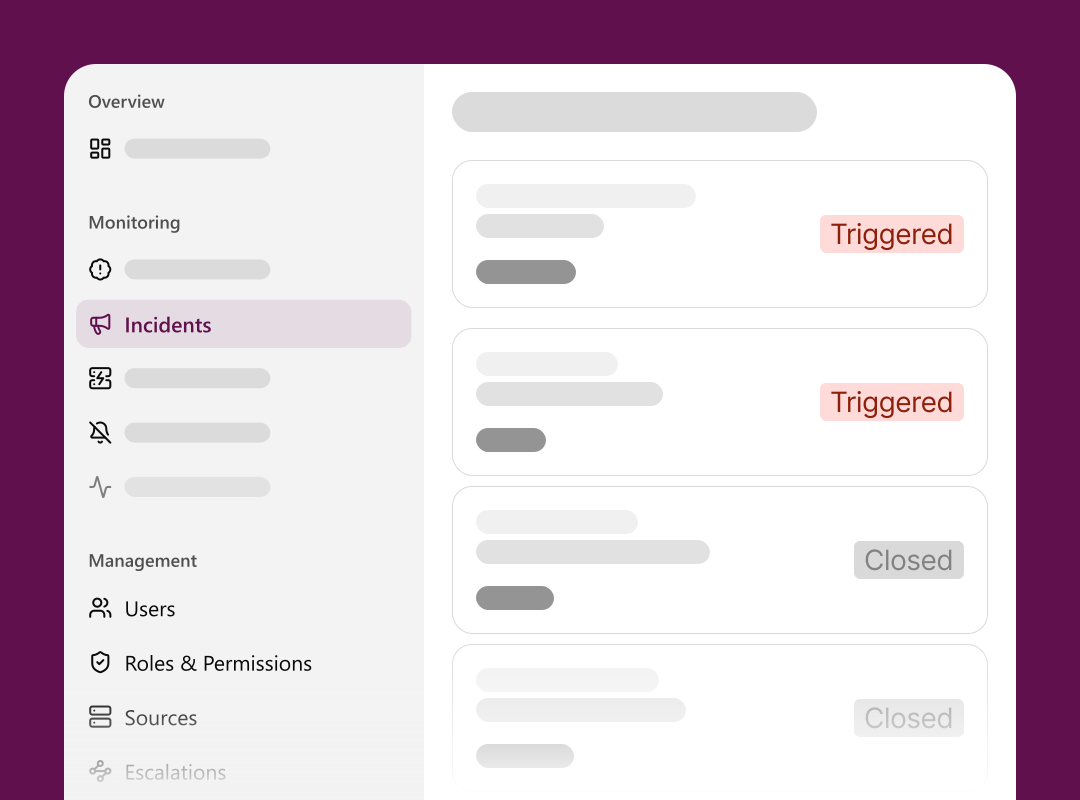
JSM treats incident management as another tab in a service desk. ITOC360 is built for one job: downtime, noise and on-call burnout.
 PagerDuty
Atlassian retires Opsgenie in April 2027. Moving now means doing it team by team, with both platforms paging in parallel, instead of against a deadline.
Trusted by SREs and infrastructure leaders








Atlassian has already stopped selling Opsgenie. The date that matters is the one after it.
June 2025
New sales closed
The platform stopped taking customers.
Now
The only unpressured window
Long enough to move team by team, and to change your mind about how you do on-call while you are at it.
April 2027
End of life
APIs and data access shut down. Unmigrated data is deleted.
It's easy to default to Jira Service Management when it's bundled into your stack. But when production goes down, you don't need a ticketing system — you need an active incident platform.
JSM treats incident management as another tab in a service desk. ITOC360 is built for one job: downtime, noise and on-call burnout.
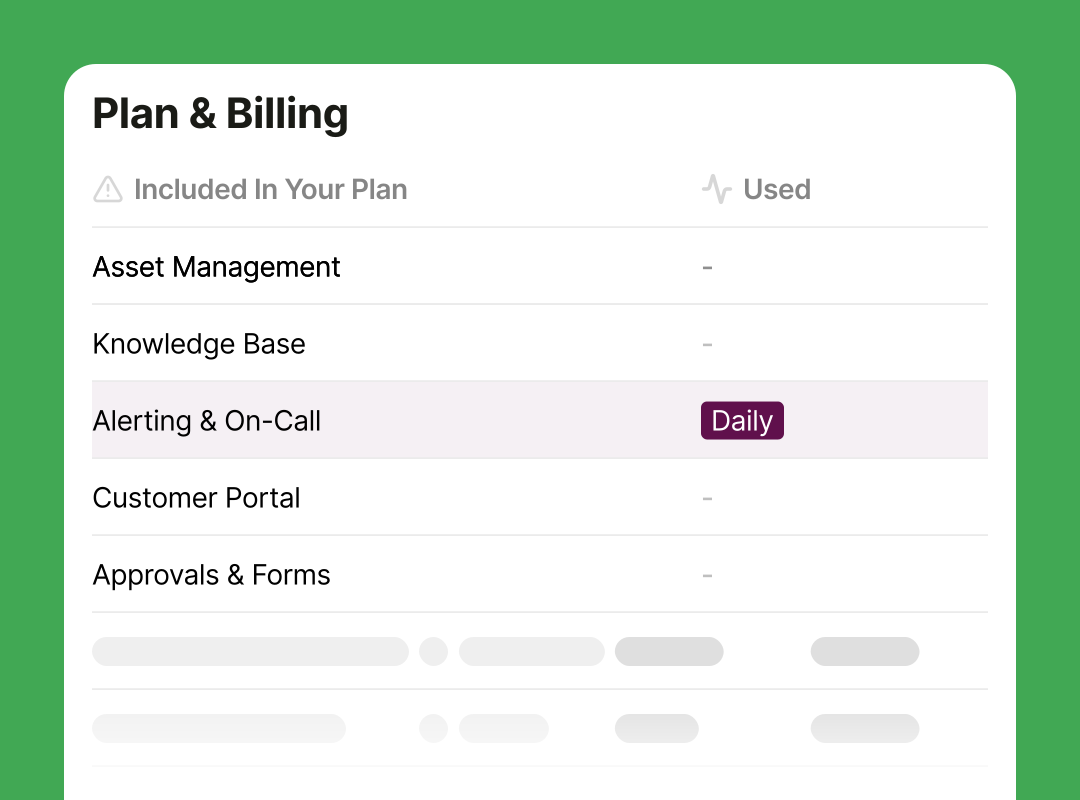
Stop paying for enterprise ticketing features your engineers will never open. Enterprise-grade alerting, on pricing you can read.
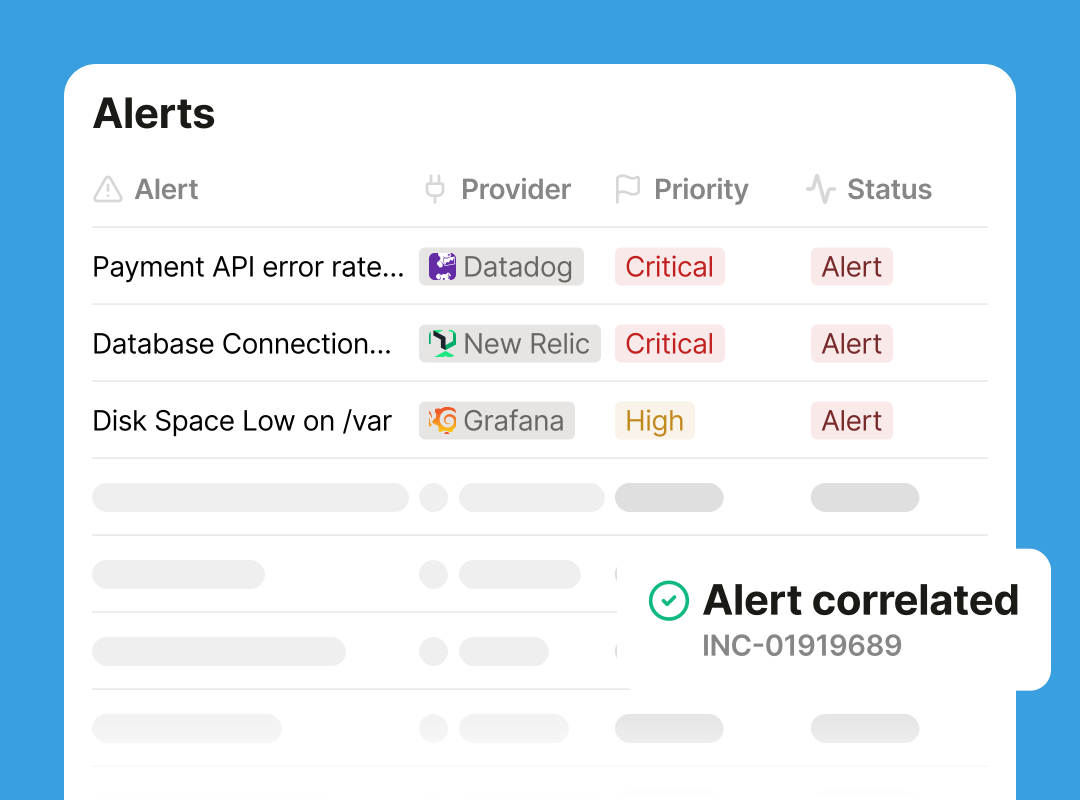
Critical outages should not be buried in help-desk workflows. Route, correlate and resolve alerts before they reach a customer.
You shouldn’t have to choose between fixing this and honouring a renewal you already signed. Run ITOC360 alongside Opsgenie at no cost until your contract ends.
The alternative is waiting for a renewal date to make a decision you have already made.
Manage incidents where you chat, correlate alert storms, and page the right engineer — all from one unified platform.
| Feature |  |  |
|---|---|---|
| Product status | Actively developed | End of support April 5, 2027 |
| New signups | Open | Closed since June 4, 2025 |
| Your data after end of life | Not applicable | Permanently deleted if not migrated |
| Migration required | Not required | Required — to Jira Service Management or Compass |
| Free plan | Free forever, includes SMS, voice calls and push | Up to 5 users, email and push only |
| Voice calls on the free plan | Yes | Not offered |
| Plan with unlimited SMS and voice | Advanced — $18 / user / mo | Standard — $19.95 / user / mo |
| Entry paid plan | Foundation — $12 / user / mo, no overage billing | Essentials — $9.45 / user / mo, SMS capped, overages billed |
| International SMS overage | No overage charges | $0.35 per notification on Essentials |
| Incoming call routing | Yes | Add-on — $10 / mo per additional number |
| Alert and voice languages | 29+, AI speech, per responder | Limited |
| AI alert grouping and noise reduction | Included in every plan | Not native — only after migrating to JSM |
| Uptime SLA | 99.99% written SLA on Premium | Ends with the product |
| Minimum seats | 3 (Foundation) | Not applicable |
Opsgenie figures are publicly available list pricing as of September 2026. A quoted price may differ.
These have no Opsgenie column because there is nothing to map them to.
On every plan, with no per-call ceiling to design around.
Not a subset that grows as you move up tiers.
The one you are looking at, next to the ones that looked like it before.
The hours nobody is actually on call, found before an alert finds them.
A person who knows your setup, not a queue.
The timeline, the chat and the latency around it, compiled into a write-up when the incident closes.

We expected the migration to be one of those projects that keeps getting pushed back. The ITOC360 team helped us work through our schedules and escalation policies, and we had the core setup running in about two weeks.
We connected Grafana, AWS CloudWatch, GitHub and our other alert sources without building a bunch of custom middleware. That made the rollout much less disruptive for the engineering teams.
Alert correlation actually works. It grouped 50 Redis alerts into one ticket last week.
The escalation policies are legible to anyone on the team, not just the person who built them. New engineers can open a policy and understand the escalation logic without needing a walkthrough.




Both page in parallel until the last step. You turn Opsgenie off when you are ready, not before.
We audit your schedules, escalation policies, integrations and routing rules to uncover dead configuration, broken paths and coverage gaps before anything changes.
We define the rollout phases, pilot teams, timelines and cutover strategy upfront, so you know exactly what will move, when it will move and what to expect at every stage.
Team by team, tested against live traffic.
Not before. Both page in parallel until then.
Exporting schedules and rules, setting up alert sources, then running both platforms in parallel for a week or more. We do the mapping and stay on the call for your first live rotations.
Yes — over 50 monitoring tools, with alerts normalised so they can be correlated rather than just forwarded.
APIs and data access shut down and unmigrated data is deleted. Atlassian points at Jira Service Management; it is a service desk with on-call attached rather than an incident platform.
Opsgenie’s lower tiers limit routing and escalation, which is what pushes teams up a tier. ITOC360 includes routing, escalation and on-call at every tier, so the price you compare is the price you pay.
Encryption in transit and at rest, SSO and MFA, an audit log, and European data residency. The security page sets out where data lives and who can reach it.