Best Incident.io Alternatives for Modern DevOps Teams
Quick answer: If incident.io's Slack-native coordination and postmortems are what you need more of, Rootly and FireHydrant are the closest alternatives. If your real gap is alerting, escalation, or on-call — which incident.io doesn't cover — ITOC360, ilert, or Zenduty close that gap, and our PagerDuty and Opsgenie guides cover that category in full.
Incident.io built a compelling product around incident collaboration: structured communication during live incidents, automated status updates, and postmortem workflows that turn resolved outages into organizational learning. For teams whose primary pain was unstructured incident communication, it filled a genuine gap.
But incident.io is not an alert routing platform. It is not an on-call scheduling platform. And it was never designed to handle the front end of the incident lifecycle — the moment a monitoring alert fires and needs to reach the right engineer within seconds.
If your problem is alerting, escalation, or on-call scheduling, this isn't the guide you need. Read our PagerDuty alternatives or Opsgenie alternatives guides instead — they cover that side of the stack in depth.
This guide is for a different, more specific question: who else does what incident.io does well — Slack-native coordination, structured comms, and postmortem automation — and does it better for your team?
Disclosure: ITOC360 is our product. It appears in this list, and we say so explicitly in its section. We've also flagged where a competitor — including incident.io itself — is the better fit for a given team, because a comparison that always ends in our favour isn't a comparison.
What Incident.io Does Well (And Where It Stops)
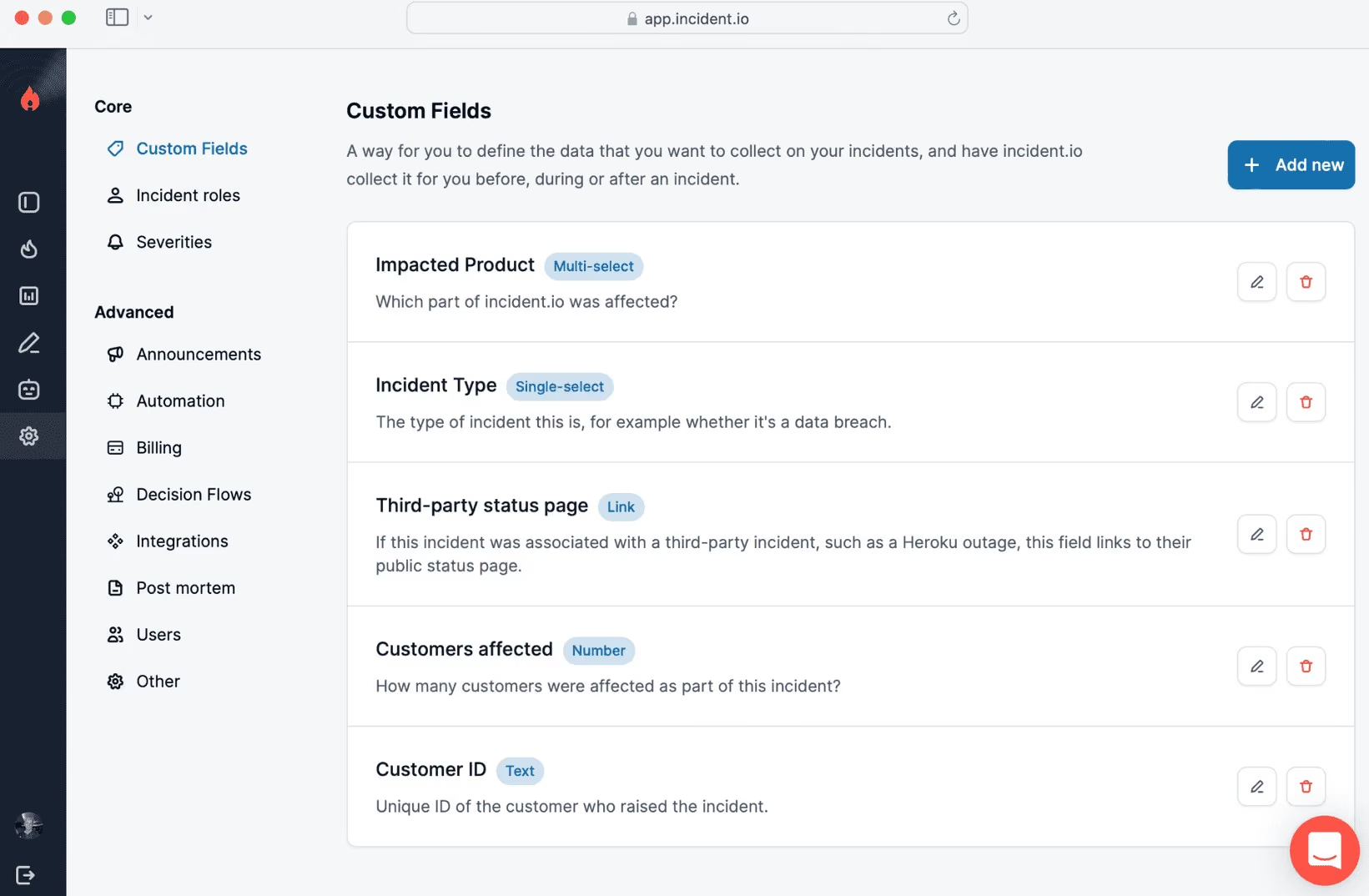
Incident.io excels at the coordination layer of incidents that are already in progress. Its Slack-native interface makes it easy to declare incidents, assign roles, post structured updates, and run retrospectives without leaving chat. Teams who previously managed incidents through ad-hoc Slack threads find the structure immediately valuable.
Where it stops is the detection-to-response pipeline. It does not correlate alerts from your monitoring stack into unified incidents. It does not enforce escalation policies. It does not call your engineer at 3 AM when a Slack notification goes unread. Those gaps are real, but they belong to a different category of tool — and a different buying decision than the one this article is about.
What to Look for in a Coordination-Focused Alternative
If incident.io's core job — structured incident comms, timeline tracking, and postmortem workflows — is what you're trying to replace or upgrade, the evaluation criteria look different from an on-call platform comparison. Here's exactly how we evaluated each tool below.
How we evaluated these tools
Every alternative below was assessed against the same six criteria, in this order of weight:
Chat-native depth — does the tool live inside Slack/Teams the way incident response actually happens, or does it pull responders into a separate app mid-incident?
Postmortem and retro automation — auto-generated timeline from the incident channel, or manual reconstruction after the fact?
Alert correlation and detection-to-response coverage — does it only coordinate incidents that are already declared, or does it also catch and route the alert that triggers one?
On-call and escalation depth — native scheduling and escalation, paid add-on, or not offered at all?
Stakeholder communication — can non-engineering stakeholders get updates without joining the incident channel?
Pricing model and how it scales — per-user, flat, and what sits behind an upgrade wall.
Note what's not on this list: escalation policy enforcement and on-call rotation logic. Those matter — just not for this comparison. If they're your actual priority, that's an alerting-platform decision, not a coordination-tool decision, and belongs in our PagerDuty or Opsgenie guides instead.
Best Incident.io Alternatives for Coordination and Postmortems in 2026
1. Rootly
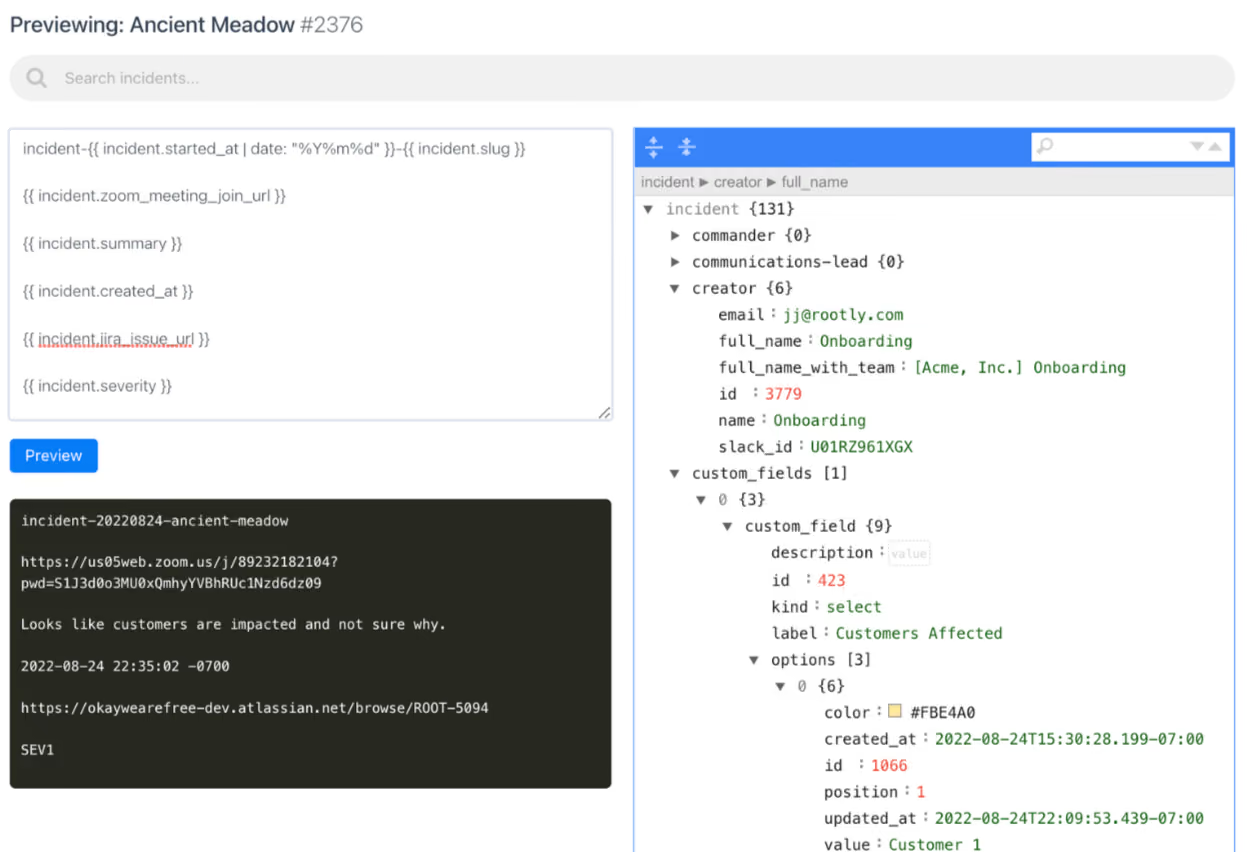
Rootly is the closest like-for-like competitor to incident.io. It's also Slack-native, also built around declaring and managing incidents from chat, and also invests heavily in retrospective tooling.
Strengths: Visual workflow builder for role assignment and notification cadence without engineering involvement; more configurable retro templates out of the box; generally undercuts incident.io on per-seat price.
Limitations: No alert correlation — you bring your own monitoring and alerting stack; on-call is limited compared to dedicated platforms; still fundamentally chat-dependent, same structural ceiling as incident.io.
Verdict: If you like incident.io's model but want more workflow customization or a lower bill, Rootly is the straightforward upgrade. It doesn't solve anything incident.io already doesn't solve.
2. FireHydrant
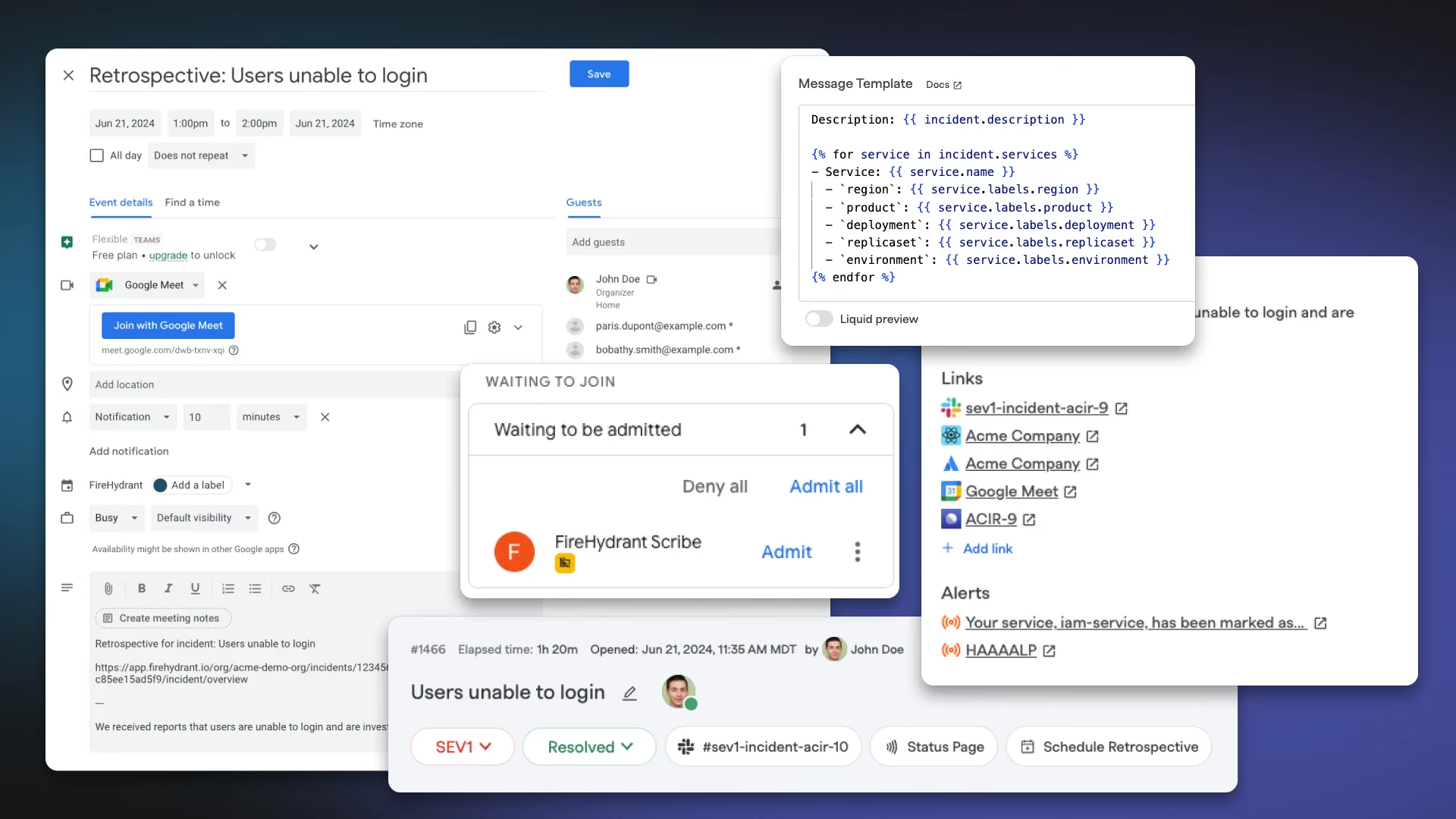
FireHydrant treats incident coordination as part of a broader operational maturity story — it pairs structured response with a service catalog, so every incident is automatically tied to the service and owner it affects.
Strengths: Service-ownership mapping scopes retrospectives and action items automatically; runbooks can trigger response steps on declaration; strong audit trail for compliance-driven teams.
Limitations: Setup effort is real — the service catalog only pays off if kept current; overkill under ~50 engineers; no alert-level correlation, same as Rootly.
Verdict: If your blocker is "who owns this service" during an incident, or you need documented process for SOC 2, FireHydrant earns its complexity. If you're a small team, it's more scaffolding than you need.
3. ilert
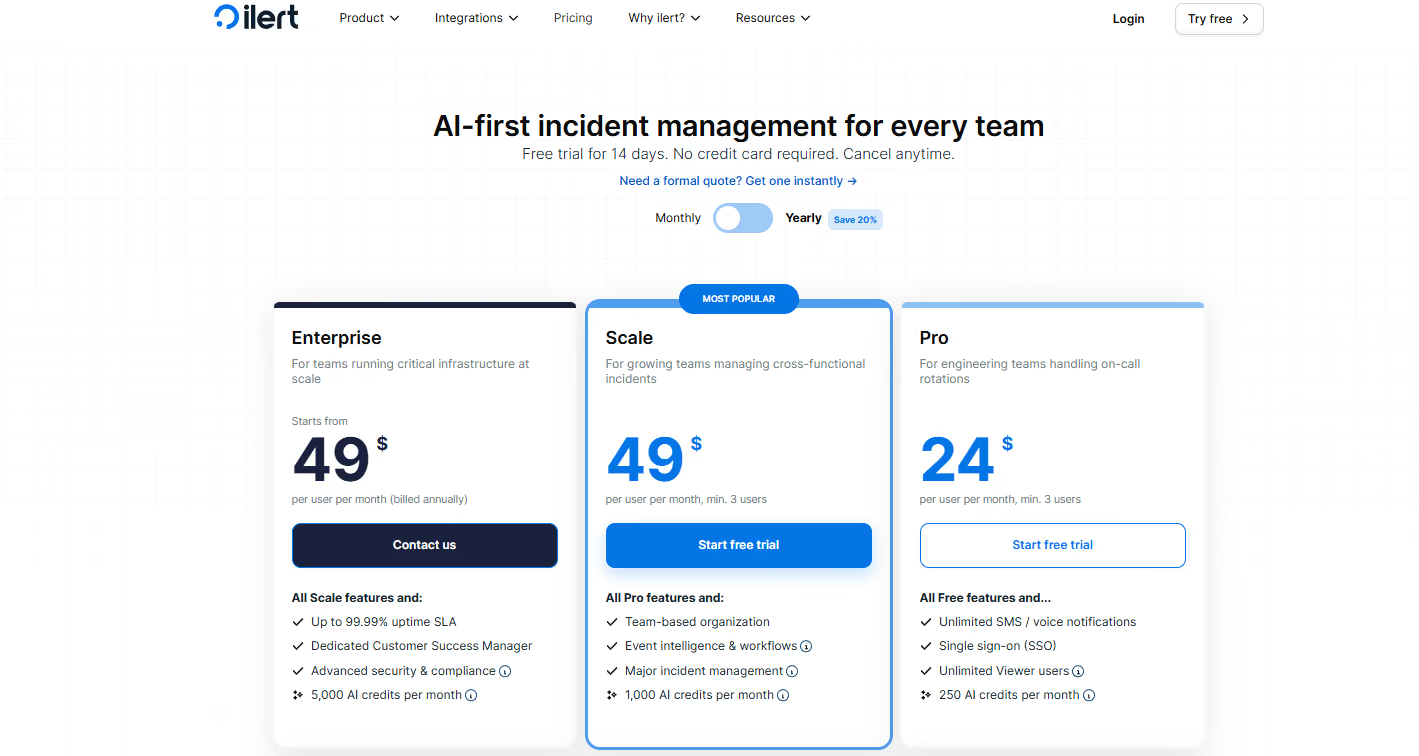
Ilert positions itself explicitly as an end-to-end alternative to incident.io, and its differentiator is that it doesn't assume Slack or Teams is your only interface. Alerting, status pages, and incident coordination live on one platform without a hard chat dependency.
Strengths: AI-powered alert grouping reduces manual correlation config; live call routing as a fallback when chat notifications are missed; on-call and status pages included, not bolted on.
Limitations: Postmortem tooling is less mature than incident.io's or Rootly's; smaller ecosystem and integration catalog; chat-native experience, while optional, is less polished than incident.io's when you do use it.
Verdict: Good fit if your team isn't fully Slack-dependent and you want built-in alerting without adding a second vendor. Not the pick if postmortem depth is your priority.
4. Zenduty
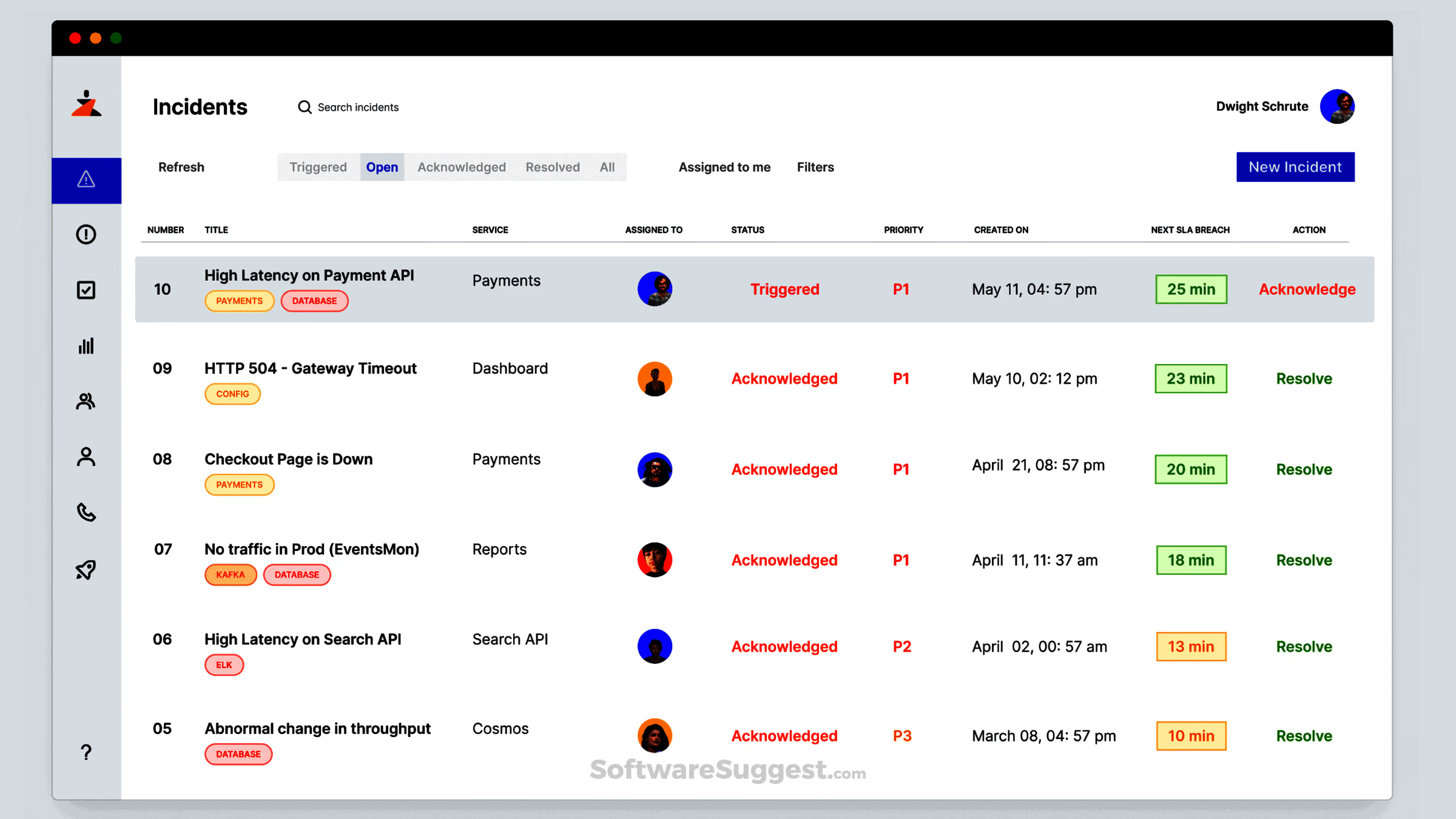
Zenduty combines incident coordination with automation-heavy response orchestration, aimed at teams that want less manual incident management overhead.
Strengths: Automation rules trigger runbooks, assign roles, and update stakeholders by severity without a human deciding each step; genuinely reduces the coordination load a human incident commander otherwise carries.
Limitations: Alert correlation is rule-based, not ML-based — it won't catch relationships your rules didn't anticipate; smaller brand and integration ecosystem than incident.io or PagerDuty.
Verdict: Best for leaner teams that want automation to substitute for a dedicated IC role, not for teams that want a polished chat-native experience first.
5. Better Stack
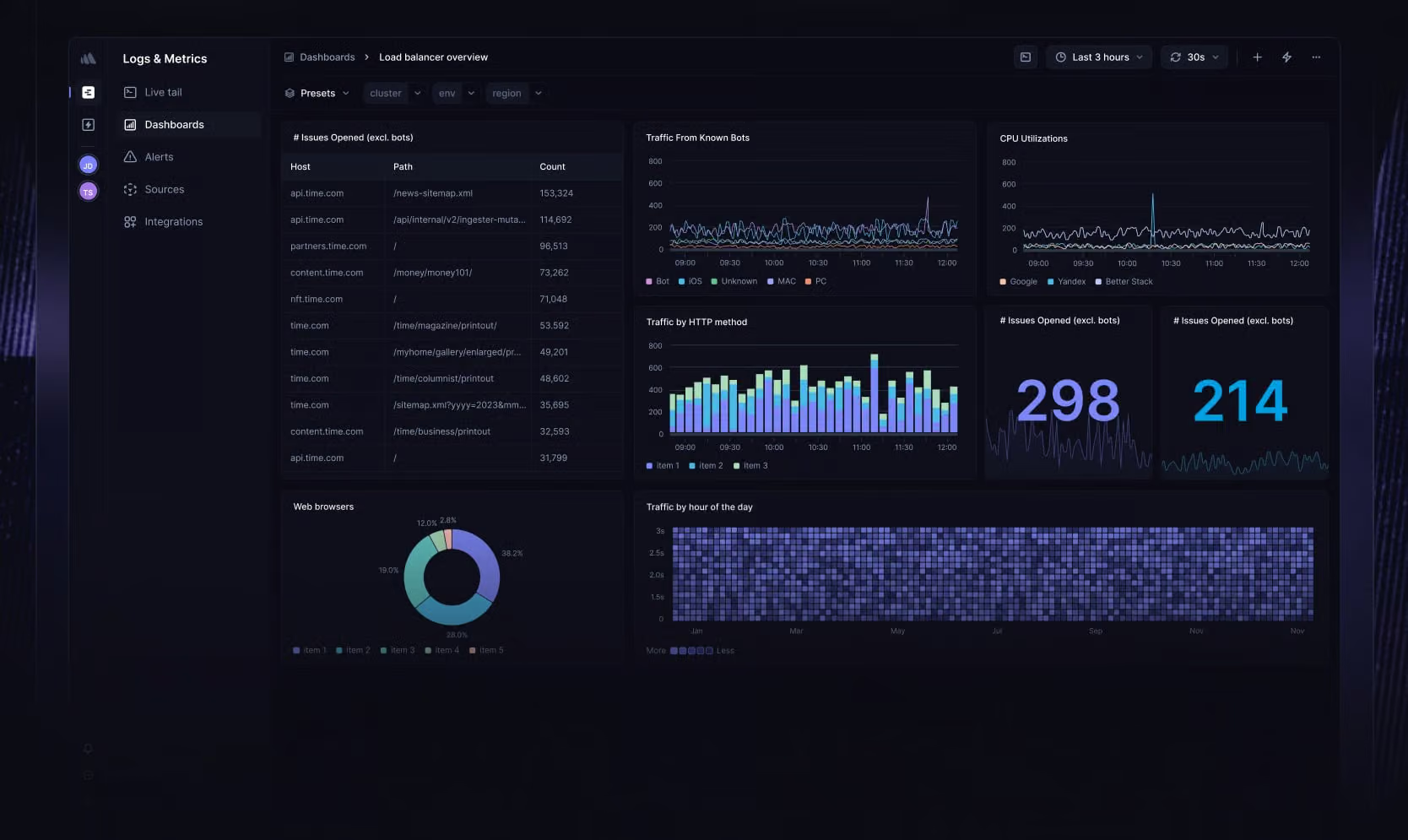
Better Stack bundles uptime monitoring, incident coordination, and status pages into one modern, well-designed package — useful if you want the detection and coordination layers to natively talk to each other instead of gluing tools together.
Strengths: Incidents can be automatically opened, timelined, and closed from real monitoring signals — something incident.io can't do without an external integration; clean, modern UI; genuinely useful free tier.
Limitations: Correlation is basic (monitoring-alert-driven, not cross-source ML correlation); less enterprise-grade than PagerDuty or ITOC360 for complex on-call; log management upsell can get expensive at scale.
Verdict: Solid pick for small-to-mid teams that want monitoring and coordination in one tool instead of stitching incident.io to a separate monitoring product.
If Your Problem Is Actually Alerting, Not Coordination
Two names come up constantly in incident.io conversations for a different reason: teams that need what incident.io was never built to do.
PagerDuty is the incumbent on-call and escalation platform — mature routing rules, a massive integration catalog, and enterprise-grade compliance features. It solves the detection-to-acknowledgment problem incident.io leaves open. If that's your actual gap, our PagerDuty alternatives guide breaks down the full field, including how PagerDuty itself compares.
Opsgenie solves a similar problem inside the Atlassian ecosystem — native Jira ticket linking, flexible on-call scheduling — but Atlassian's wind-down of the product has made it a forced migration for many teams rather than a choice. If Opsgenie's end-of-life is what brought you here, our Opsgenie alternatives guide and Opsgenie shutdown guide cover the migration decision in full.
Neither replaces incident.io's coordination layer — they solve the layer underneath it.
6. ITOC360 — full lifecycle, detection through postmortem (our platform)
ITOC360 takes a different approach from every other tool on this list: instead of specializing in one layer of the incident lifecycle, it's built to cover detection through resolution in a single platform. Its AI-powered alert correlation engine groups related signals from your entire monitoring stack — Zabbix, Grafana, Datadog, New Relic, Prometheus, Azure Monitor, AWS CloudWatch, and more — into unified incidents before they ever reach an engineer. Its escalation engine enforces response timelines automatically, its scheduling layer handles the full complexity of real-world on-call rotations, and its built-in postmortem action-item tracking closes the loop after resolution.
Where the Slack-native tools above (Rootly, FireHydrant) require you to bring your own alerting platform, and the alerting-focused tools (ilert, Zenduty) treat postmortems as a secondary feature, ITOC360 is built as a single operational platform end to end. The Incident Response product page has the full breakdown, and the integrations page shows how it connects to the monitoring tools you're already running.
Two ways teams use it: run ITOC360 as the complete incident platform on its own, or pair it with incident.io — letting ITOC360 own detection, correlation, and escalation while incident.io handles in-channel coordination. Either way, the gap incident.io leaves open gets closed.
Incident.io alternatives at a glance
Tool | Best for | Entry pricing | Chat-native | Alert correlation | Built-in on-call | Postmortem automation |
|---|---|---|---|---|---|---|
incident.io | Slack-first coordination, transparent pricing | ~$19–25/user/mo | Yes | Basic "similar incidents" only | Paid add-on | Yes |
Rootly | Deeper workflow automation, lower per-seat cost | ~$15/user/mo | Yes | No | Limited | Yes, configurable |
FireHydrant | Service catalog, compliance-heavy teams | Free tier / ~$35/seat/mo | Yes | No | No | Yes, compliance-focused |
ilert | Less Slack dependency, AI alert grouping | Free trial / tiered | Optional | Yes | Yes | Yes |
Zenduty | Automation substituting for a dedicated IC | Free tier / usage-scaled | Yes | Rule-based only | Yes | Automated |
Better Stack | Monitoring + coordination in one tool | Free tier / ~$29/member/mo | Yes | Basic monitoring alerts | Yes | Yes |
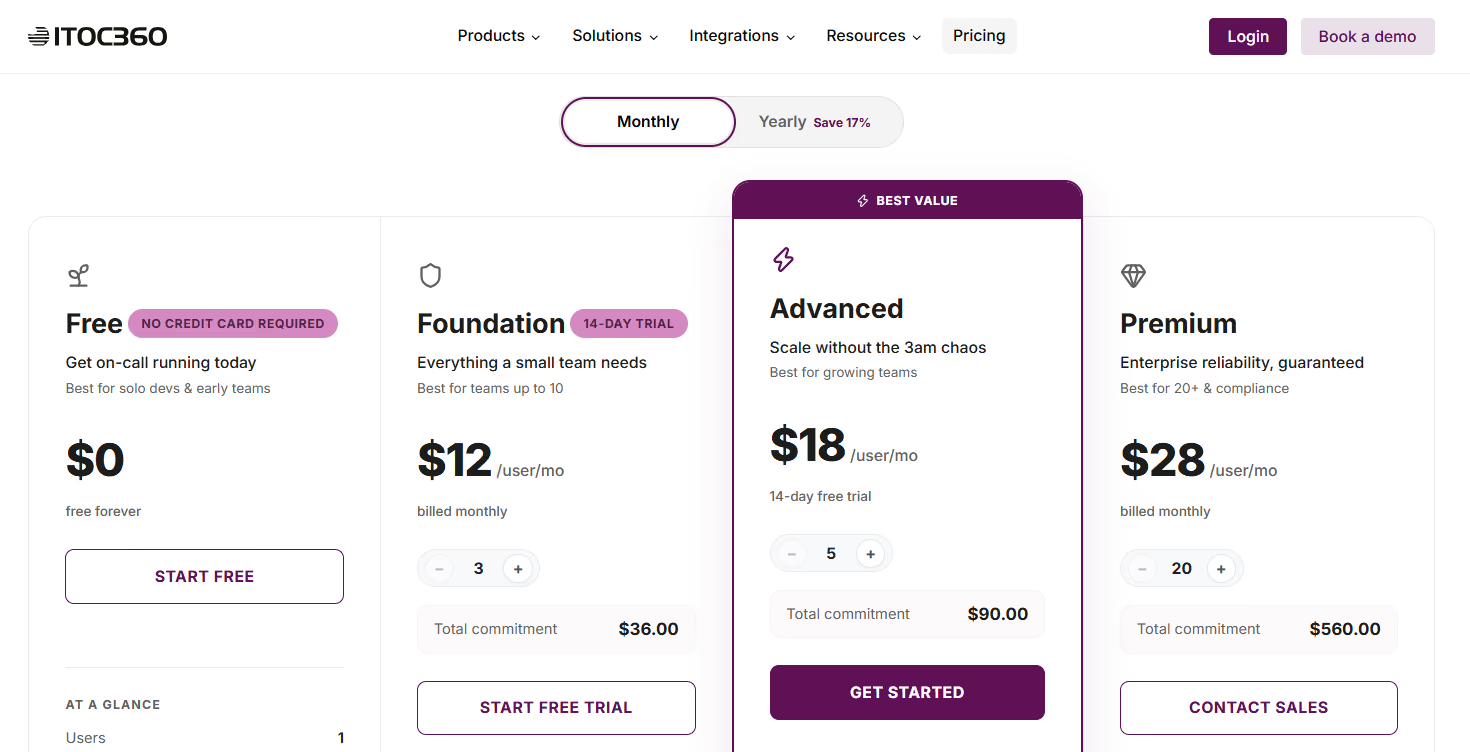
ITOC360 | Full lifecycle: detection through postmortem | Free option / $12/user/mo | Yes | Yes, ML-based, multi-source | Yes, full rotation logic | Yes, built-in action items |
ITOC360 is the only platform on this list that combines AI-driven alert correlation across your full monitoring stack with native postmortem action-item tracking and full on-call rotation logic in one product — most alternatives above cover one or two of these, not all three.
How to choose
Match the tool to where your process actually breaks down:
Your problem is coordination — incidents are detected fine, but nobody knows who's doing what once declared. → incident.io, Rootly, or FireHydrant, depending on whether polish (incident.io), workflow automation (Rootly), or compliance documentation (FireHydrant) matters most.
Your problem is detection — alerts fire, but they're noisy, uncorrelated, or don't reach the right person fast enough. → ITOC360 or ilert.
Your problem is cost — the coordination tool works, but on-call is a separate paid add-on you can't justify. → ITOC360 (built-in on-call at the base price) or Better Stack.
You need both layers and don't want two vendors. → ITOC360 covers detection through postmortem in one platform. If you'd rather keep incident.io's coordination and add a correlation/on-call layer underneath it, ITOC360 and incident.io run fine side by side — many teams do exactly that.
FAQ
Can I use incident.io alongside PagerDuty or ITOC360? Yes — this is the most common setup. Incident.io handles chat-native coordination and postmortems; a dedicated on-call platform like PagerDuty or ITOC360 handles alert correlation, escalation, and scheduling. The two layers are complementary, not competing.
Does incident.io have built-in on-call scheduling? Incident.io offers on-call scheduling as a paid add-on, while ITOC360 includes on-call scheduling as a built-in feature at no additional cost.
What's the closest alternative to incident.io for a Slack-native team? Rootly is generally the closest match — same chat-native workflow, similar postmortem focus, with more configurable automation.
Is there a free incident.io alternative? ITOC360, FireHydrant, Zenduty, and Better Stack all offer free tiers for small teams; incident.io does not.