Best Alert Management Software in 2026: 8 Tools Compared for IT and SRE Teams
Most alert management tools look the same on a features page. They all integrate with your monitoring stack, page someone, and escalate if nobody answers. The real differences show up later: in how well they cut noise, what the on-call feature actually costs, and how much work it takes to move your alerts in.
This guide compares eight alert management platforms that IT operations, NOC, and SRE teams use in 2026, with list prices, the real cost for a 10-person team once add-ons are counted, and a checklist for testing any of them with your own alerts.
Quick answer: Our top pick for most IT operations, NOC, and SRE teams is ITOC360. It puts noise reduction, on-call, and escalation in one per-user price starting at $12, with no add-ons to buy, which makes it the lowest-cost option in this comparison for a team that needs all three. PagerDuty suits large enterprises that need a very broad integration catalog and can budget for add-ons. incident.io and Rootly suit teams that run incidents in Slack or Microsoft Teams. Grafana Cloud IRM suits teams already on Grafana Cloud. ilert suits teams that need EU hosting. If you use Opsgenie, plan your move now, because it shuts down on April 5, 2027.
How we compared these tools
Disclosure: ITOC360 is our product. We've tried to describe every tool, including our own, by what it documents publicly and where each one fits, rather than by marketing claims.
We compared each platform against the eight stages of the alert management lifecycle: ingest and normalize, deduplicate, correlate, prioritize and enrich, route and notify, escalate, resolve, and review. For each tool we looked at:
Noise reduction: how it handles deduplication and correlation, and whether those features cost extra.
On-call and escalation: whether scheduling and escalation are in the base price or an add-on.
Pricing: published list prices, minimum seats, and the real monthly cost for a 10-person team.
Fit: the kind of team and stack each tool is built around.
Prices come from each vendor's pricing page or, where a vendor doesn't publish a full table, from current listings on software review sites. They were checked in October 2026 and can change, so confirm before you buy.
Why ITOC360 is our top pick
We rank ITOC360 first for teams whose biggest problem is alert noise, which, according to Grafana Labs' 2026 Observability Survey, is the most common obstacle to faster incident response. Five reasons:
The lowest total cost in this comparison, with no add-ons. A 10-person team pays $120 a month on ITOC360 Foundation, with on-call, escalation, maintenance windows, and alert grouping included. The same team pays $250 on incident.io Team with on-call, $400 on Rootly Essentials, and more than $1,100 on PagerDuty Business once AIOps is added.
Noise reduction is part of the product, not a separate purchase. Deduplication, time-based and sliding-window grouping, and ML-based correlation are built into ITOC360. On PagerDuty, machine-learning noise reduction is a separate AIOps product starting at $699 per month.
On-call is never a second license. incident.io charges $10 to $20 per user per month extra for on-call, and Rootly sells on-call as a separate $20 product. On ITOC360, every paid plan includes it.
Measured results. Across 14 engineering teams on ITOC360 in Q2 2026, correlating alerts before paging cut pages per incident from 8.4 to 1.2.
Built for mixed stacks and Opsgenie migrations. Native integrations with Zabbix, Prometheus, Datadog, Grafana, Splunk, and others, listings in the official Zabbix and Prometheus integration directories, schedules and escalation policies mapped from an Opsgenie export, and voice and alert messages in 29+ languages.
What Alert Management Software Does
Alert management software sits between your monitoring tools and the people who respond. Monitoring tools like Zabbix, Prometheus, Datadog, and Grafana detect problems. Alert management software decides what happens next: it collects those alerts in one place, merges repeats, groups related alerts into one incident, works out who is on call for the affected service, notifies them through the right channel, and escalates if nobody responds.
IT alert management software and IT alerting software usually mean the same thing. The useful distinction is between three kinds of tools you'll see on review sites:
On-call and alert management platforms, like the ones in this guide, which handle routing, scheduling, escalation, and noise reduction.
Monitoring tools with built-in alerting, which can send notifications but rarely manage on-call schedules or alerts from other tools.
Mass notification tools, which broadcast messages to many employees and aren't built for engineering on-call.
If you're new to the topic, start with our complete guide to alert management, which explains each stage in detail.
Alert Management Software Compared at a Glance
Tool | Type | Pricing model | On-call in base price? | Noise reduction (as documented) | Good fit if |
|---|---|---|---|---|---|
ITOC360 | Alert and incident management in one platform | Per user, from $12/user/mo | Yes | Time-based and sliding-window grouping, plus ML-based correlation | Alert noise is your main problem and you want one price |
PagerDuty | Incident management platform | Per user, from $21/user/mo (annual) | Yes | Event rules on all plans; ML grouping in a separate AIOps add-on | You need a very large integration catalog |
incident.io | Chat-based incident management | Per user, from $15/user/mo (annual) | No, add-on | Alert deduplication and grouping in its alerts product | You run incidents in Slack or Microsoft Teams |
Rootly | Chat-based incident management | Per user, $20 per product | No, separate product | Deduplication and grouping | You want incident workflows built around Slack |
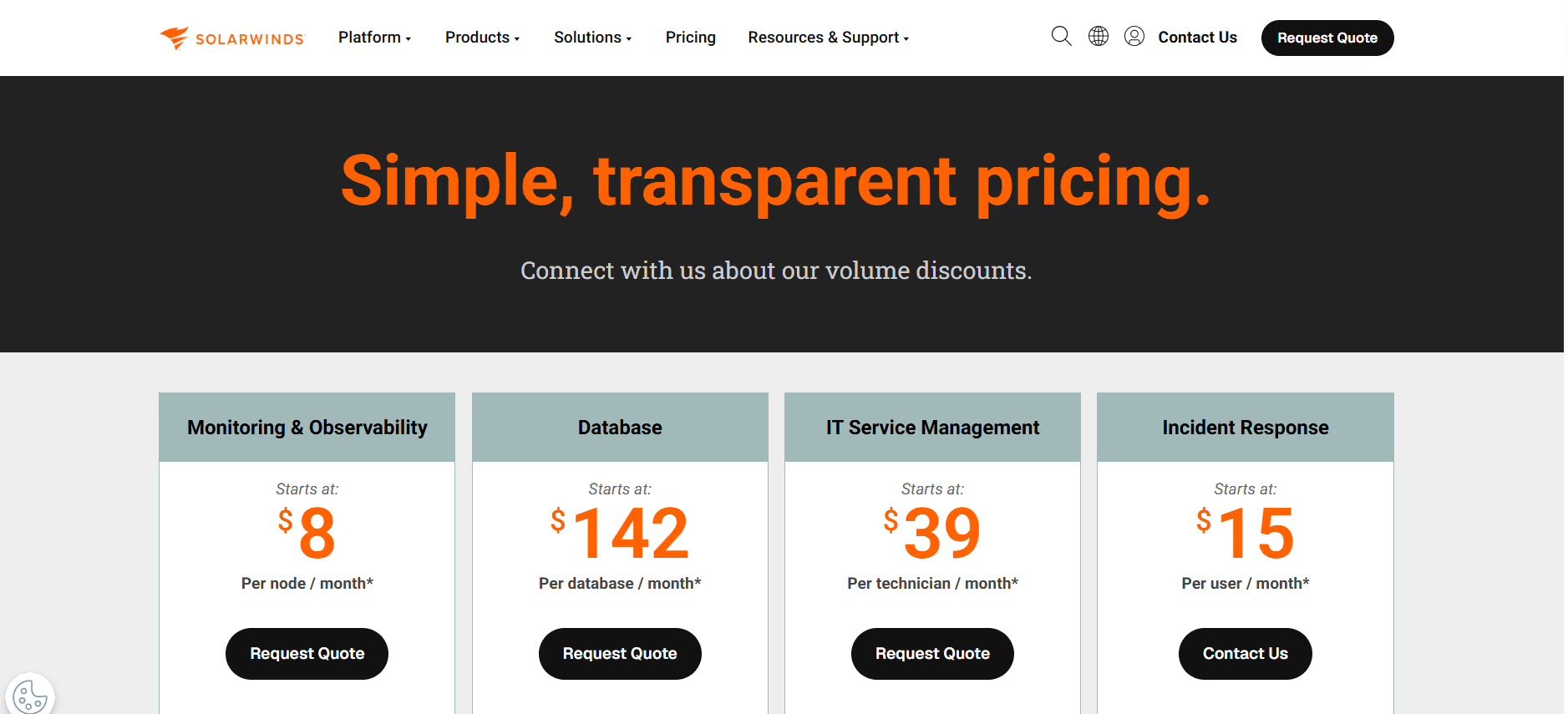
Squadcast (SolarWinds) | On-call and incident response | Per user, from about $15/user/mo (annual) | Yes | Deduplication and suppression rules | You're a smaller team watching budget |
ilert | Alerting, on-call, status pages | Per user, from €19/user/mo | Yes | Alert grouping and AI features | You need EU hosting and data residency |
Grafana Cloud IRM | On-call within Grafana Cloud | $19/mo platform fee, then $20 per active user | Yes | Alert grouping within Grafana | You already run Grafana Cloud |
Jira Service Management (Opsgenie) | Atlassian ITSM with on-call | Per agent | Yes | Alias-based deduplication | Transitional only; Opsgenie shuts down April 5, 2027 |
What It Really Costs for a 10-Person Team
Per-user list prices hide the real number. In several tools, on-call is a separate add-on, and machine-learning noise reduction is a separate product. The table below shows what 10 people on call would pay per month at list price, sorted from lowest to highest, for a plan that covers on-call, escalation, and noise reduction.
Tool and plan | Monthly cost for 10 users | Add-ons needed |
|---|---|---|
ITOC360 Foundation | $120 (about $100 billed yearly) | None. On-call, escalation, maintenance windows, and alert grouping included |
Squadcast Pro | About $150 (annual billing) | None for on-call |
Grafana Cloud IRM Pro | $159, plus other Grafana Cloud usage | Requires Grafana Cloud |
ITOC360 Advanced | $180 (about $150 billed yearly) | None. Adds sliding grouping, unlimited SMS and voice, Jira and ServiceNow sync |
ilert Pro | €190 | None for on-call |
incident.io Team + on-call | $250 (annual billing) | On-call add-on, $10 per user |
Rootly Essentials | $400 | Second product for on-call, $20 per user |
incident.io Pro + on-call | $450 (annual billing) | On-call add-on, $20 per user |
PagerDuty Business + AIOps | $1,109 (annual billing) | AIOps for ML noise reduction, from $699 per month |
Two patterns stand out. First, ITOC360 Foundation has the lowest monthly cost in this comparison for a plan that covers on-call, escalation, and alert grouping with nothing else to buy. Second, the gap widens as soon as you need machine-learning noise reduction: on PagerDuty that's a separate AIOps purchase that costs more per month than the base licenses for a 10-person team. For a closer look at PagerDuty's add-ons, see our PagerDuty pricing breakdown.
One thing to check on any plan: limits. ITOC360 Foundation, for example, includes up to 2 monitoring sources and 100 voice calls a month, so larger stacks usually start on Advanced.
The 8 Alert Management Tools, Reviewed
1. ITOC360: Our top pick
ITOC360 is an alert and incident orchestration platform built around reducing noise before anyone is paged. Alerts from monitoring tools are deduplicated and grouped, and related alerts are correlated into one incident using machine learning. The incident then goes to whoever is on call, by voice call, SMS, push, Slack, or Microsoft Teams, with voice and alert messages available in 29+ languages. ITOC360 is listed in the Zabbix integration directory, on the Prometheus integrations page, and more.
Good fit if: alert noise is your biggest problem, you want correlation and on-call in one per-user price, or you're moving off Opsgenie.
Watch out for: the number of monitoring sources is capped on lower plans (2 on Foundation, 6 on Advanced), and custom webhooks and integrations are on the Premium plan.
Pricing: Free for 1 user. Foundation $12/user/month (3 to 10 users), Advanced $18/user/month (from 5 users), Premium $28/user/month (from 20 users). Yearly billing saves 17%. See pricing.
2. PagerDuty
PagerDuty is one of the longest-established on-call and incident management platforms, with more than 750 integrations. On-call scheduling and escalation are included in its paid plans. Machine-learning noise reduction is sold separately as PagerDuty AIOps.
Good fit if: you're a large organization with many tools that need to connect, and the add-on budget is available.
Watch out for: the total cost once add-ons like AIOps, status pages, and automation are included. See our PagerDuty alternatives if cost is the concern.
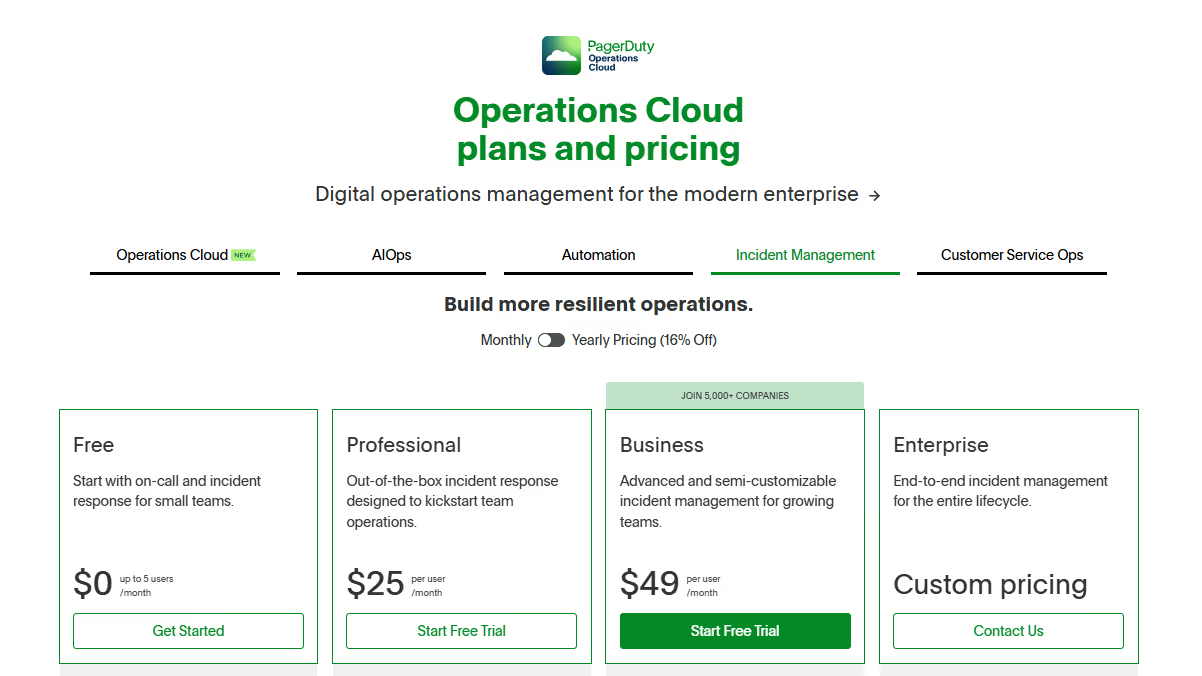
Pricing: Free for up to 5 users. Professional $21/user/month and Business $41/user/month billed annually ($25 and $49 monthly). AIOps from $699/month billed annually.
3. incident.io
incident.io is an incident management platform designed around Slack and Microsoft Teams, with on-call and alerting added as products alongside it.
Good fit if: your incident response already happens in chat, and coordinating many people across squads is the hard part.
Watch out for: on-call is a paid add-on on every plan, and Microsoft Teams support is on the Pro plan.
Pricing: Basic is free. Team $15/user/month billed annually ($19 monthly), plus $10/user/month for on-call. Pro $25/user/month, plus $20/user/month for on-call.
4. Rootly
Rootly is a Slack-centric incident management platform that sells incident response and on-call as separate products.
Good fit if: you want incident workflows and retrospectives built tightly around Slack.
Watch out for: a responder who also carries the pager needs both products, and its AI SRE product isn't publicly priced.
Pricing: Incident Response Essentials $20/user/month and On-Call Essentials $20/user/month.
5. Squadcast
Squadcast combines on-call and incident response in one product. It was acquired by SolarWinds in March 2025.
Good fit if: you're a smaller team that wants on-call and incident response together at a lower per-user price.
Watch out for: its public pricing table shows more than one plan view, so confirm the current plans, and check the product roadmap under SolarWinds.
Pricing: Free for up to 5 users. Pro about $15/user/month and Premium about $24/user/month, billed annually.
6. ilert
ilert is an alerting, on-call, and status page platform made and hosted in Germany, with AI features built in.
Good fit if: you need EU hosting and data residency, or your customers require a European vendor.
Watch out for: prices are published in euros, so budget for currency changes if you pay in dollars.
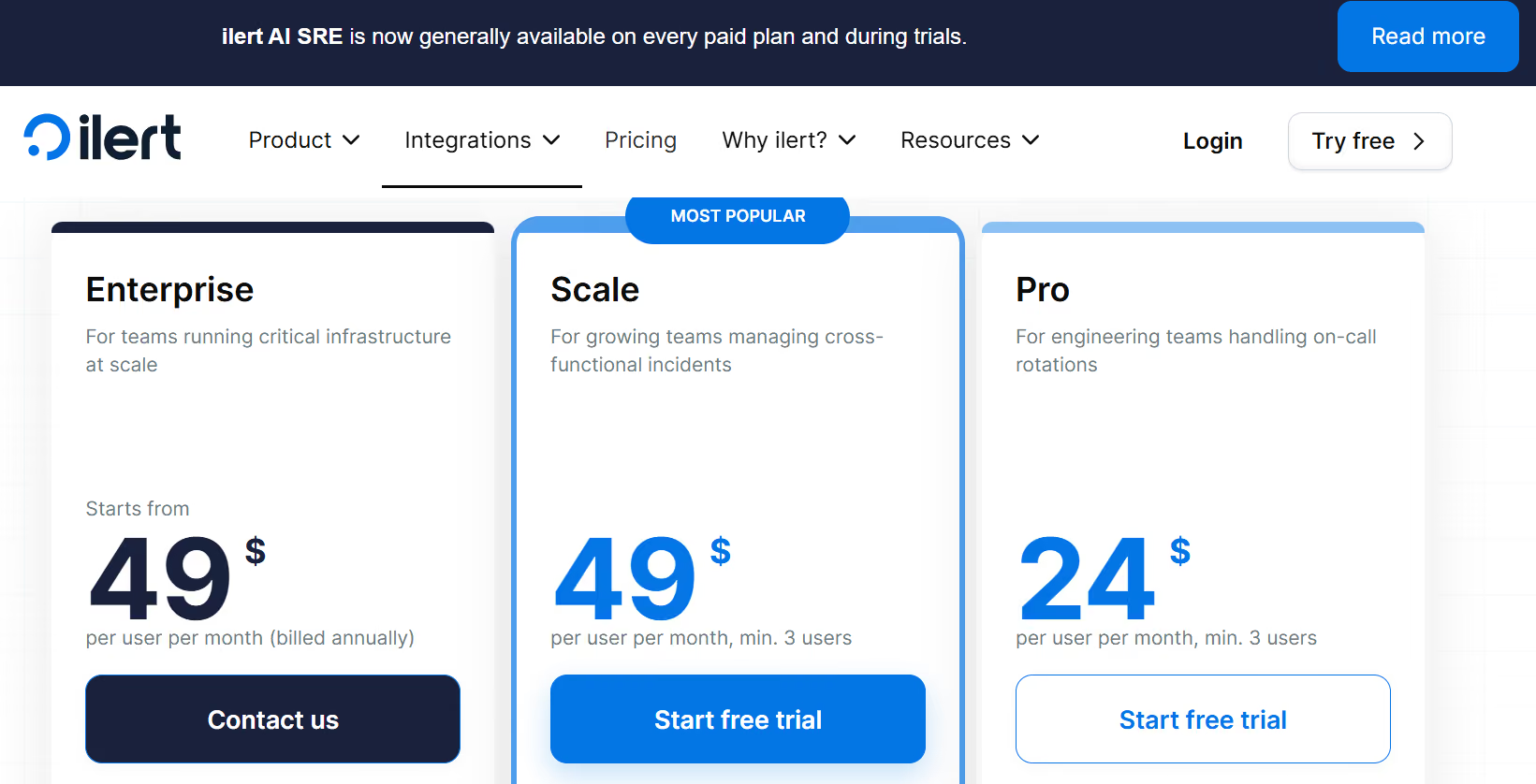
Pricing: Free plan available. Pro €19/user/month, Scale €39/user/month, Enterprise €49/user/month.
7. Grafana Cloud IRM
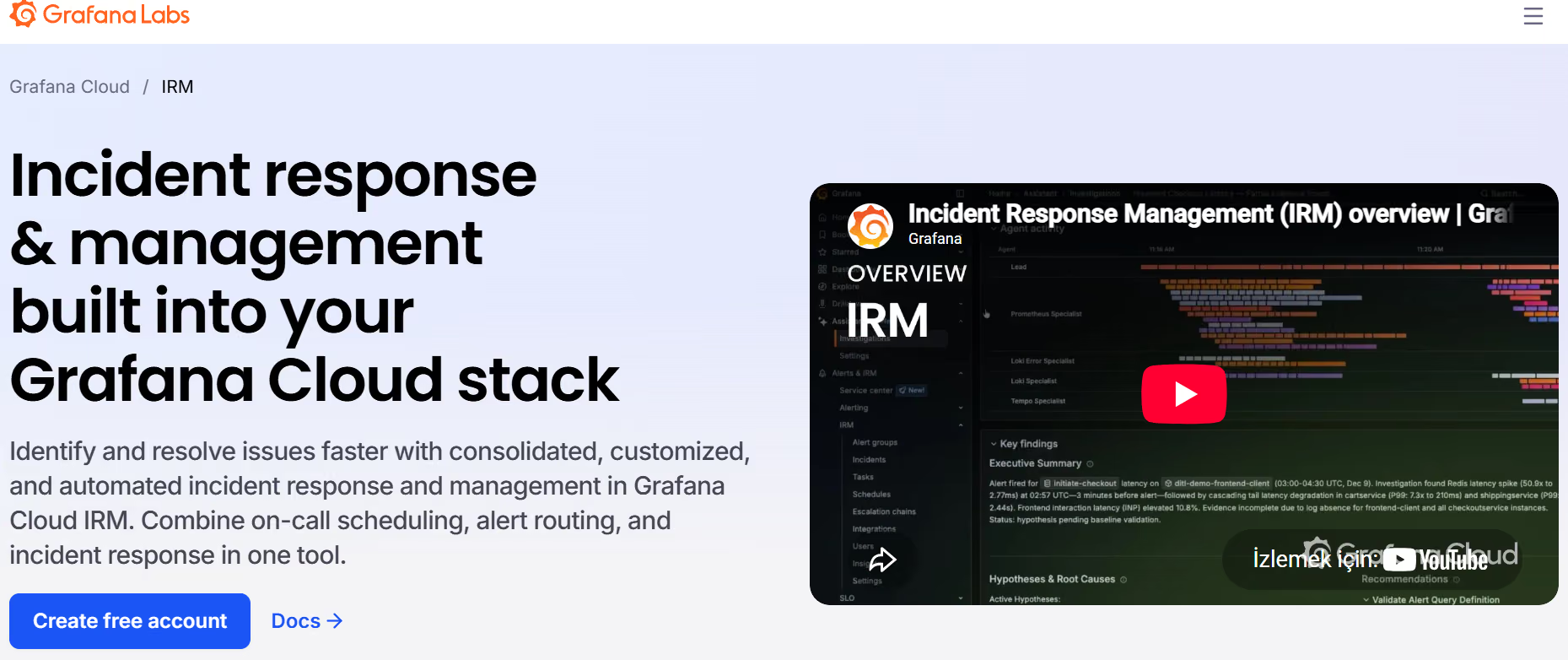
Grafana Cloud IRM combines on-call and incident management inside Grafana Cloud. The open-source Grafana OnCall project has been archived, so teams that self-hosted it are moving to Cloud IRM or another tool.
Good fit if: your monitoring and dashboards already live in Grafana Cloud.
Watch out for: it's priced per active user, so costs can rise during a large incident when many people join, and it's tied to the Grafana Cloud platform.
Pricing: Free for up to 3 active users. Pro has a $19/month platform fee that includes 3 active users, then $20 per additional active user. Enterprise starts at a $25,000 annual commitment.
8. Jira Service Management (formerly Opsgenie)
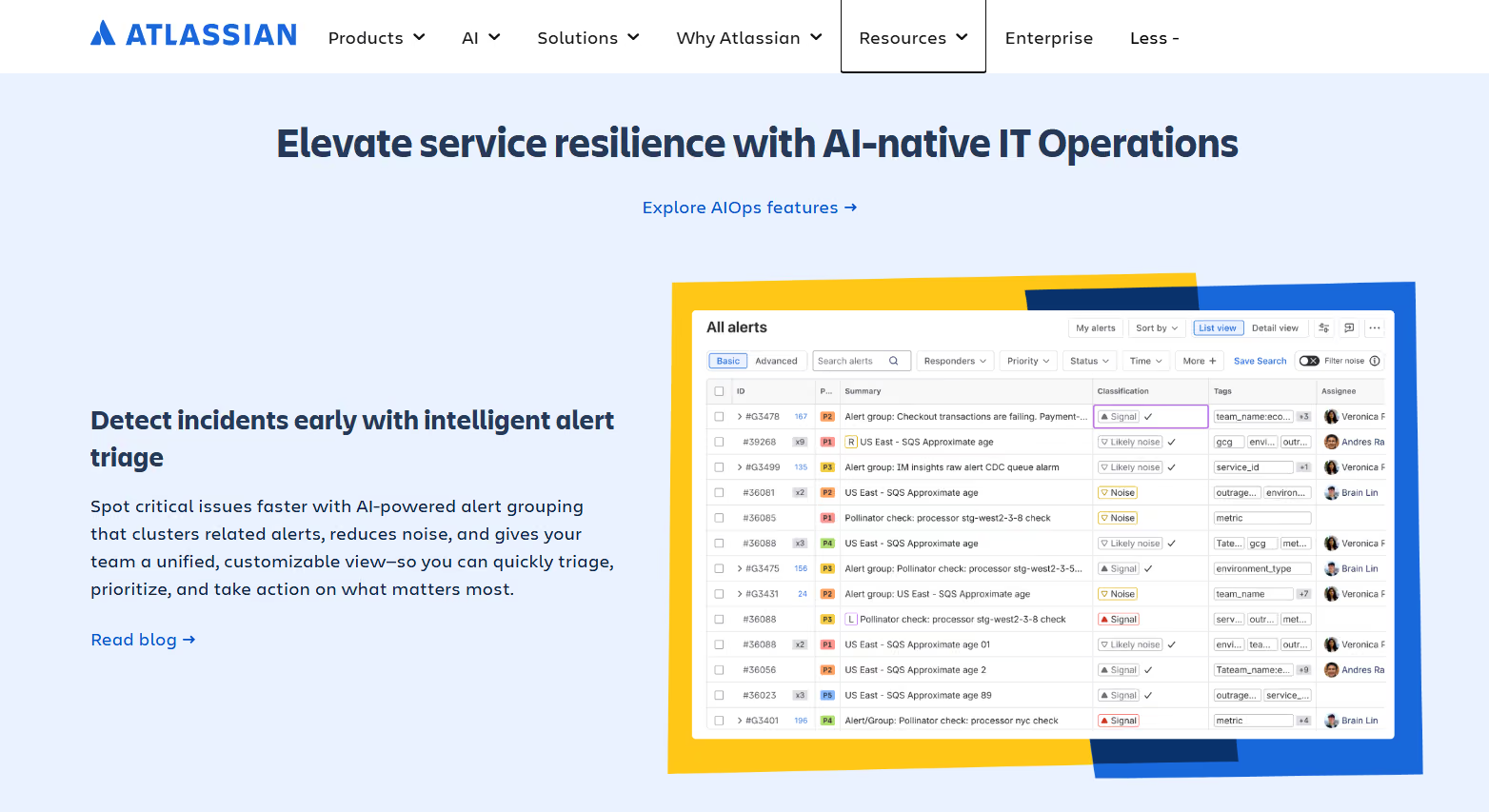
Opsgenie's alerting and on-call features are moving into Jira Service Management, and Opsgenie itself shuts down on April 5, 2027.
Good fit if: you're standardized on Atlassian and plan to move your on-call into Jira Service Management.
Watch out for: schedules, escalation policies, and integrations need to be migrated before the shutdown date. Our Opsgenie end-of-life guide covers the timeline, and Opsgenie alternatives compares the options.
Pricing: per agent, as part of Jira Service Management plans.
How to Choose: Start With Your Biggest Problem
Feature lists don't tell you much, because most of these tools cover the basics. A better starting point is the problem you're trying to fix.
Your biggest problem | What to look for | Tools to shortlist |
|---|---|---|
Too many alerts, too many pages | Correlation across tools included in the price, not as an add-on | ITOC360, PagerDuty with AIOps |
Opsgenie is shutting down | Import of schedules, escalation policies, and integrations | ITOC360, PagerDuty, Jira Service Management |
Coordinating many people during incidents | Chat-based incident workflows and retrospectives | incident.io, Rootly |
Everything already runs on Grafana | Native integration with your dashboards and alert rules | Grafana Cloud IRM |
EU data residency | EU hosting and a European vendor | ilert |
Responders away from a desk | Reliable mobile alerting and acknowledgment | ITOC360, PagerDuty |
Small team, tight budget | A free plan or low per-user price with on-call included | ITOC360, Squadcast |
Whatever you shortlist, check it against the 10-point best practices checklist in our alert management guide, and make sure it supports the steps you'll need to reduce alert fatigue, not just send notifications faster.
How to Test Alert Management Software in a Trial
A demo shows you the tool working on perfect data. A trial with your own alerts shows you what will actually happen. Pick your noisiest team and run these eight tests in two weeks.
Connect your real sources. Send alerts from at least two monitoring tools, for example Zabbix and Prometheus, including recovery events.
Test deduplication. Let one check fire repeatedly. Confirm it stays one alert with a counter, and that the recovery event closes it. See what a good dedup key looks like.
Test correlation. Trigger a failure that causes alerts in two tools for the same service. Confirm they end up in one incident, with a visible reason for the grouping.
Test that unrelated alerts stay separate. Fire an unrelated alert at the same time. Confirm it isn't merged into the first incident.
Test escalation. Ignore a page and confirm it escalates to the next person on time, by voice call.
Test the night path. Send a low-severity alert outside working hours. Confirm it doesn't wake anyone.
Test a maintenance window. Schedule one and confirm alerts from that system are silenced, and come back when it ends.
Compare the numbers. Pages per incident and MTTA, before and after the trial.
The tool that wins this test is usually the right one, regardless of how long its feature list is.
Frequently asked questions
What is alert management software?
Alert management software collects alerts from monitoring tools, merges duplicates, groups related alerts into incidents, notifies the on-call engineer through the right channel, and escalates when nobody responds.
What is the best alert management software?
Our top pick for most IT operations, NOC, and SRE teams is ITOC360, because it includes noise reduction, on-call, and escalation in one per-user price starting at $12, with no separate AIOps add-on. PagerDuty suits large enterprises that need many integrations, incident.io and Rootly suit chat-based incident response, and Grafana Cloud IRM suits teams already on Grafana Cloud.
What is the difference between IT alert management software and IT alerting software?
In practice the terms are used interchangeably. Both describe tools that route monitoring alerts to on-call engineers. Some review sites also list mass notification tools as IT alerting software, but those are built for broadcasting messages to employees, not engineering on-call.
How much does alert management software cost?
Most tools charge per user per month. Among the tools in this comparison, list prices for plans that include on-call range from $12 to $49 per user per month. Several vendors charge separately for on-call or for machine-learning noise reduction, so compare the total for your team, not the headline price.
Is there free alert management software?
Yes. ITOC360 has a free plan for one user, and PagerDuty, incident.io, Squadcast, ilert, and Grafana Cloud IRM offer free plans for small teams, usually up to three to five users.
What features should alert management software have?
Integrations with your monitoring tools, deduplication, correlation across sources, on-call scheduling, automatic escalation, voice and SMS notifications, maintenance windows, and reporting on MTTA, MTTR, and alert volume.
Do monitoring tools like Prometheus or Zabbix need separate alert management software?
They can send notifications on their own, but they don't manage on-call schedules, escalation, or alerts from other tools. Teams with more than one monitoring tool, or more than a few people on call, usually add an alert management platform.
Final Thoughts
The right alert management software is the one that makes your on-call engineers trust the pager again. Start from your biggest problem, price the plan you'll actually need for your team size, and test the shortlist with your own alerts. If noise is the problem, try ITOC360 free and run the trial checklist above against it.
Related Reading
Alert Management: The Complete Guide for IT Operations and SRE Teams
How to Reduce Alert Fatigue: A 10-Step Playbook for On-Call Teams
Alert Deduplication: How It Works and How to Design Dedup Keys
Sources
ITOC360, Pricing
PagerDuty, Pricing
incident.io, Pricing
Rootly, Pricing
Grafana Labs, Pricing
ilert, plan pricing as listed on Capterra
TrustRadius, Best IT Alert Management Software
Zabbix, ITOC360 integration